Skin Testing Services
for Topical Drug Development


CPL’s Skin Lab Supports the Growing Need for IVRT & IVPT Testing Excellence
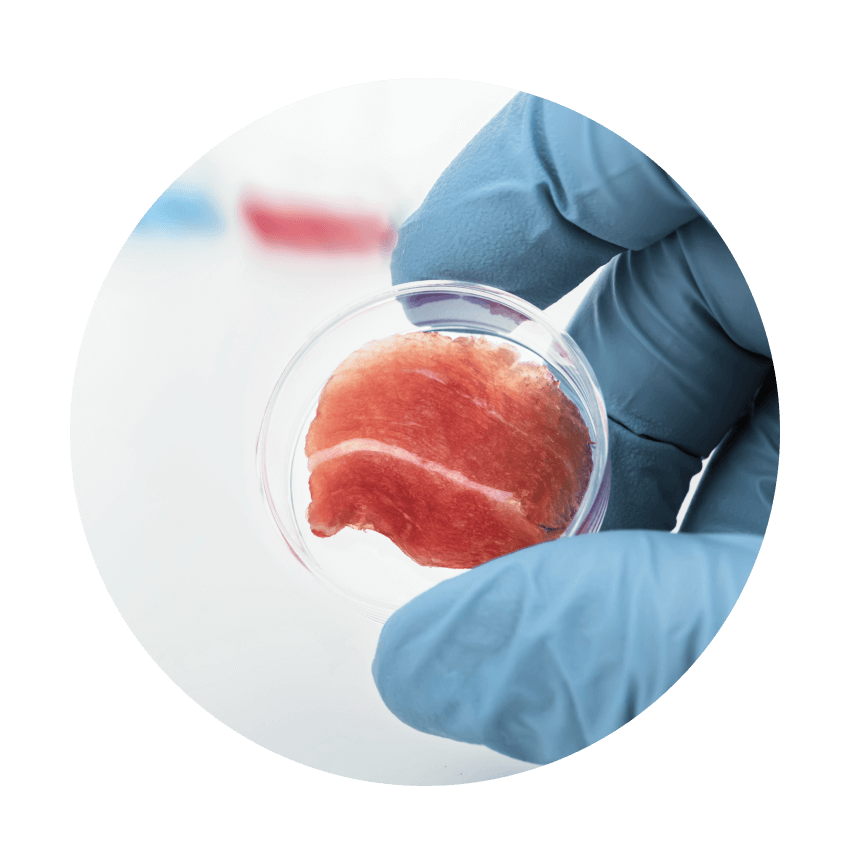
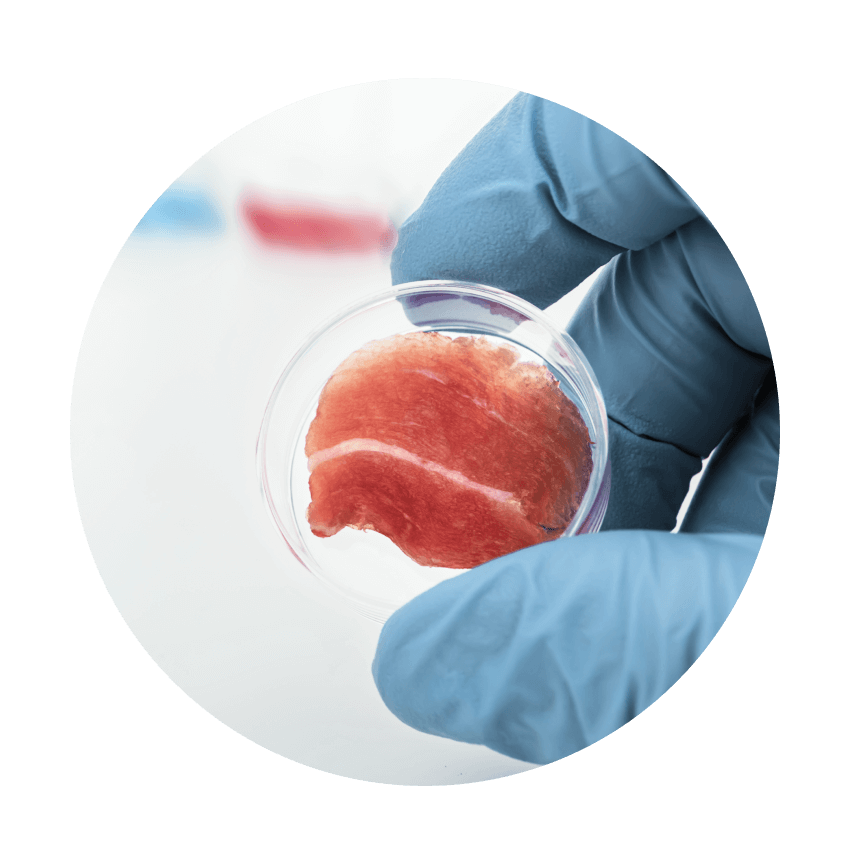
Topical drugs excel at providing targeted, localized therapeutic impact, but their effectiveness is challenged by the skin barrier, particularly the stratum corneum, which is highly effective at protecting the body against foreign substances. CPL’s Skin Lab is one of North America’s leading labs. It leverages its in vitro permeation testing (IVPT) and in vitro release testing (IVRT) expertise to help developers navigate penetration challenges and drug release profiles, and demonstrate equivalency for scale-up and post-approval changes.
Fast, Insightful Skin Testing Guides
Formulation and Process Decisions
CPL’s Skin Lab facilitates integrated formulation, process development, and product performance evaluation. Our IVRT, IVPT, and skin distribution analysis capabilities provide rapid feedback on drug product release and permeation, enabling immediate adjustments to excipients, rheology, or process parameters and drastically reducing the need for expensive, time-consuming in vivo testing.
in vitro Release (IVRT) Testing
- Manufacturing Site Transfers
- Post-Approval Formulation Changes
- Scale-Up
- Quality Control

IVRT evaluates drug release rates from topical or transdermal formulations and is valuable for supporting manufacturing site transfers, post-approval formulation changes, scale-up, ensuring batch-to-batch consistency, and comparing generic and reference formulations for regulatory approval, or serving as a quality control parameter for batch release and stability monitoring. However, successful IVRT requires experience, expertise, and sophisticated instrumentation, as slow-release formulas and poorly soluble APIs can be challenging to work with, and incremental method design biases can skew results and stall timelines. CPL’s outstanding scientists bring proven IVRT experience across lotions, gels, creams, ointments, sprays, and transdermals, generating regulatory-ready data that helps support successful approvals.
in vitro Release (IVRT) Testing
- Manufacturing Site Transfers
- Post-Approval Formulation Changes
- Scale-Up
- Quality Control
in vitro Permeation (IVPT) Testing
- Assess Drug Permeation Profiles
- Optimize Formulations
- Determine Drug Distribution

IVPT measures the amount of drug reaching the desired skin layer, the rate of permeation, and the rate of change in permeation over time. Using skin or mucosal tissue mounted in diffusion cells, CPL’s scientists apply creams, gels, ointments, lotions, transdermal patches, or liquid formulations and quantify the API that moves into and through the targeted tissue. The resulting permeation profiles help optimize formulations, compare prototypes, and verify delivery efficiency. IVPT can also map drug distribution within specific skin layers, supporting the development of topical and transdermal formulations.
in vitro Permeation (IVPT) Testing
- Assess Drug Permeation Profiles
- Optimize Formulations
- Determine Drug Distribution
Skin Distribution Analysis
- Formulation Development Support
- Drug Screening
- Penetration

CPL’s Skin Lab has the ability to use excised animal and human skin discs to study drug distribution in the receiving medium, within the various layers of the skin, and on top of the skin (‘left over’) fractions. CPL conducts this testing to support formulation development, drug screening, and penetration.
Skin Distribution Analysis
- Formulation Development Support
- Drug Screening
- Penetration
The Skin Lab Succeeded in Testing Complex Formulations
Dedicated to Excellence
from Molecule to Commercialization
CPL supports programs from early-phase through commercial launch, combining preformulation insight, robust semi-solid and non-sterile liquid development, scalable process design, and clinical and commercial manufacturing.

Pharmaceutical Development Services
Pharmaceutical Development Services
Comprehensive expertise that turns molecules into scalable, compliant, market‑ready semi-solid and non-sterile therapies.

Analytical & Product Testing
Analytical & Product Testing
Robust analytics power confident development and manufacture of topical and non-sterile liquid products.

Clinical & Commercial Manufacturing
Clinical & Commercial Manufacturing
More than three decades of GMP manufacturing experience from clinical supply through commercialization.

Packaging, Labeling & Serialization
Packaging, Labeling & Serialization
Integrated packaging, serialization, and aggregation ensure compliant, continuous commercial supply.

Semi-Solid & Non-Sterile Liquid Expertise
Semi-Solid & Non-Sterile Liquid Expertise
Pure-play CDMO for semi-solids and non-sterile liquids, with advanced micro encapsulation capabilities.

Unique Product Handling Experience
Unique Product Handling Experience
Infrastructure and expertise to manage complex, higher-risk semi-solid and non-sterile liquid products.


FAQs
-
The FDA’s SUPAC-SS (Scale-Up and Post-Approval Changes for Non-Sterile Semi-Solid Dosage Forms) guidance was introduced in May 1997 to clarify expectations for developing and modifying non-sterile semi-solid products intended for topical administration, such as creams, gels, and ointments. The guidance provides recommendations to NDA and ANDA sponsors who intend to change (1) the components or composition, (2) the manufacturing (process and equipment), (3) the scale-up/scale-down of manufacture, and/or (4) the site of manufacture of a semisolid formulation during the postapproval period.
-
A Franz diffusion cell is a laboratory device used to study how a substance moves (diffuses) from one side of a barrier to the other, most commonly through skin or a synthetic membrane.
Picture two chambers stacked vertically with a membrane/skin clamped between them. The donor chamber (on top) holds the formulation you want to test, such as a cream, gel, ointment, or solution. The receptor chamber (below) contains a fluid that mimics biological conditions (e.g., a buffer at skin temperature) for IVPT testing, or a specific organic solution that provides a consistent release rate within a defined time window for IVRT testing. The chamber is stirred and temperature-controlled.
Over time, drug molecules travel from the formulation on the donor side through the membrane into the receptor fluid. Samples are withdrawn from the receptor chamber at set intervals and analyzed (typically by HPLC or another quantitative method) to determine how much drug has diffused and measure the release rate for the synthetic membrane or permeation rate through the skin. By plotting this data, CPL scientists can:
- Compare different topical or transdermal formulations
- Assess the impact of excipients or process changes
- Support IVRT/IVPT and bioequivalence work for semi-solid and liquid products
Because conditions like temperature, surface area, membrane type, and agitation can be tightly controlled, Franz diffusion cells provide a reproducible, standardized way to evaluate drug release and permeation outside the body, before or alongside in vivo studies.
-
In vitro permeation testing (IVPT) is a laboratory method used to measure how a drug permeates (moves) from a topical or transdermal formulation through biological membranes, most commonly human or animal skin, over time.
In a typical IVPT study, the product (cream, gel, ointment, lotion, patch, spray, etc.) is applied to the surface of excised skin mounted on a diffusion cell (often a Franz cell). A physiological “receptor” fluid flows or sits beneath the skin, and samples are collected at set intervals to assess how much drug has permeated.
IVPT data helps CPL developers:
- Compare formulations during preclinical and clinical development
- Support bioavailability or bioequivalence assessments
- Compare formulations (e.g., generic vs. reference) for bioequivalence
- Optimize excipients and drug loading
- Understand drug distribution across skin layers
-
In vitro release testing (IVRT) is a laboratory formulation performance and quality test used to evaluate the drug release rate from the formulation itself. Typically, the product is placed on a diffusion cell (often a Franz cell) on one side of a synthetic membrane, with a suitable liquid “receptor” medium on the other side. As the drug diffuses from the formulation, samples of the receptor medium are collected over time and analyzed to generate a release rate profile.
Global regulators increasingly rely on IVRT to:
- Demonstrate batch-to-batch consistency
- Support post-approval changes (e.g., new site, scale, or equipment) as per SUPAC-SS guidelines
- Establish and monitor QC release specifications
- Detecting formulation or process changes that may not be evident from physical tests
- Help support bioequivalence for generics together with IVPT in accordance with FDA and EMA guidelines.
Commitment.
Partnership. Legacy.
Leverage CPL’s 35 years of expertise in non-sterile liquids and semi-solids to ensure your program's success. We’ll support your product from molecule to market, or step in at any stage of its product lifecycle.